Good Clients vs Bad Clients

Loyalty, honesty, dedication, and tenacity.

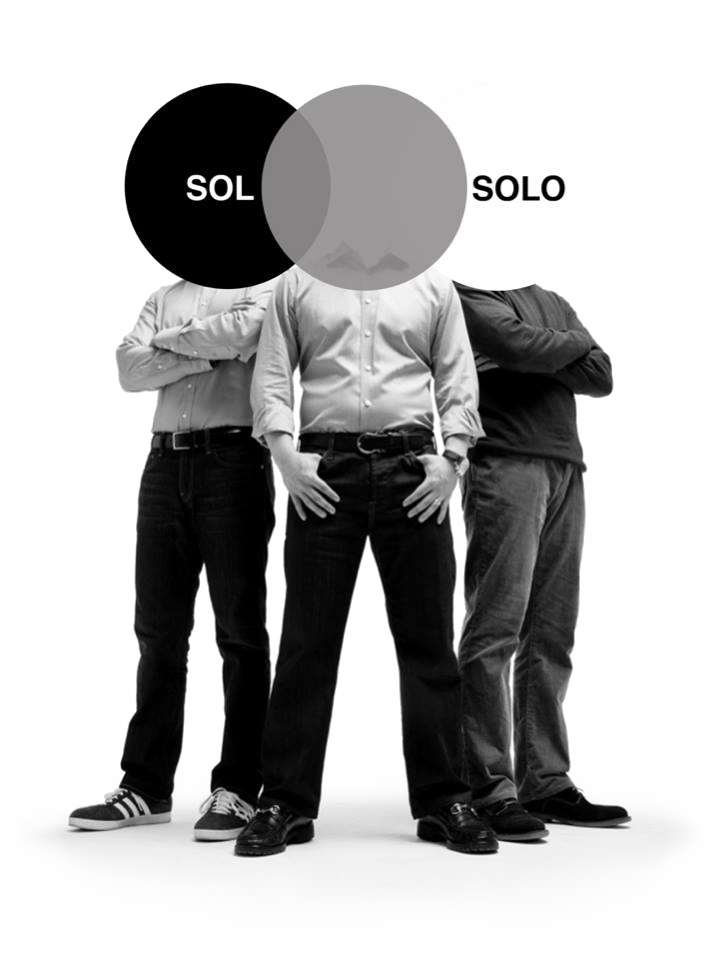
Three men in casual clothing with circular graphic overlays labeled SOLO in black, grey, and white — visual commentary on individualism and professional identity in the Sol Solo branding project by Carlos Simpson Design Studio.

Brains, Passion, Trust, and Courage.

From employees and clients The difference in between those who are smarter than you and those who are dumber than you.

The difference is not IQ. It’s behaviour.

In real work, the strongest outcomes come from people who can hold uncertainty, make decisions, and stay honest under pressure.

Good clients buy clarity and outcomes. Bad clients buy relief and control. The work only scales when trust is mutual.

What a client is

A client is a decision-maker (or direct proxy) who can define the outcome, provide access, and approve the work. If you can’t decide, you’re not the client yet.

Outcome defined Access provided Decision authority

What SolSolo is built for

Executives and founders who are capable, but not consistently recognised for it. We build a credible system: positioning, messaging, proof, and LinkedIn architecture.

Good client

They don’t need you to be psychic. They need you to be precise.

  • States the outcome and the constraints (time, stakeholders, risk).
  • Shares context early: examples, history, politics, what failed before.
  • Chooses priorities and accepts trade-offs.
  • Gives feedback that is actionable: “this is unclear because…”
  • Respects boundaries: scope, deadlines, and decision points.
  • Pays on time. Handles admin without drama.
Clarity Speed of decision Trust

Bad client

They outsource responsibility, then punish you for the uncertainty.

  • Starts with vibes, not outcomes. “You know what I mean.”
  • Withholds context, then changes the brief midstream.
  • Confuses feedback with preference: “I just don’t like it.”
  • Wants control without doing the work of decisions.
  • Moves deadlines, adds stakeholders, and calls it “minor”.
  • Uses money, urgency, or status to pressure quality.
Control Scope drift Blame

Good vs Bad in one table

Dimension Good client Bad client
Brief Outcome + constraints + audience Vague wants + moving target
Decision-making Clear owner, fast decisions Committee drift, delayed approvals
Feedback Specific, testable, grounded Personal taste, contradictions
Access Shares assets, context, stakeholders Withholds, then blames
Scope Respects boundaries and trade-offs Adds “small” extras endlessly
Trust Assumes competence, asks hard questions Assumes guilt, demands reassurance

Bring this

  • Your LinkedIn URL
  • One high-stakes situation (promotion, pitch, board, funding)
  • 2–3 examples of your work (emails, decks, pages, posts)

Expect this

  • Direct diagnosis of what’s unclear
  • Where trust breaks (and why)
  • A practical next step you can execute

If you’re unsure

  • If you want shortcuts or “growth hacks”, this won’t fit.
  • If you want credibility that holds under scrutiny, it will.

The goal is simple: build a personal brand system that survives meetings, not just posts.